
Digital dentistry
Digital Workflow & Intraoral Scanner in Ingolstadt
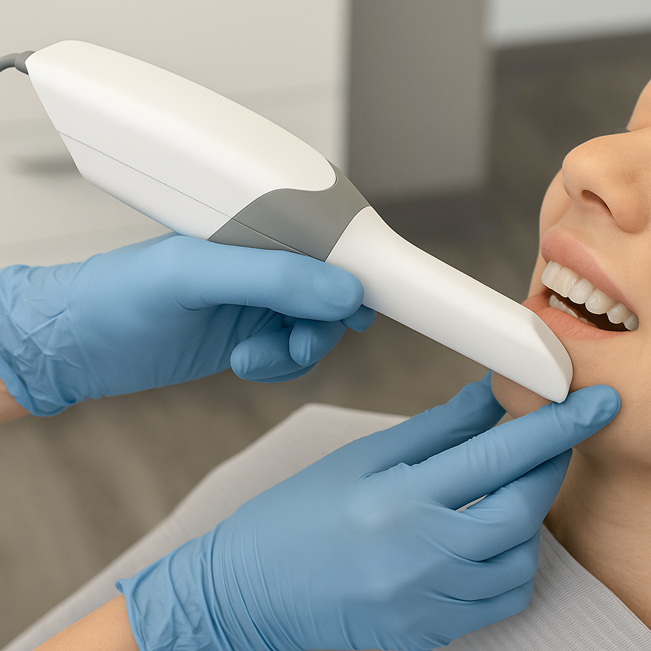
At our practice we rely on state-of-the-art technology: an intraoral scanner. This pen-shaped device creates a highly precise 3D model of your mouth within a few minutes, entirely without conventional impression material.
The digital workflow helps us make processes more efficient, establish even more accurate diagnoses and carry out treatments more comfortably, individually, safely and with foresight.
Your benefits
Modern technology for precise results and greater comfort
Greater comfort
No gag reflex from impression material: the digital impression is comfortable and quick, especially for sensitive patients.
Lightning-fast & efficient
Digital impressions are available immediately. This can shorten treatment times and help reduce the number of appointments needed.
High precision
The exact 3D model forms the basis for precisely fitting dental restorations and accurate planning of your treatment.
Seamless integration
The digital workflow simplifies planning, transfer and production: the data can be transmitted directly and securely to the dental laboratory.
Modern practice
Digital processes under one roof
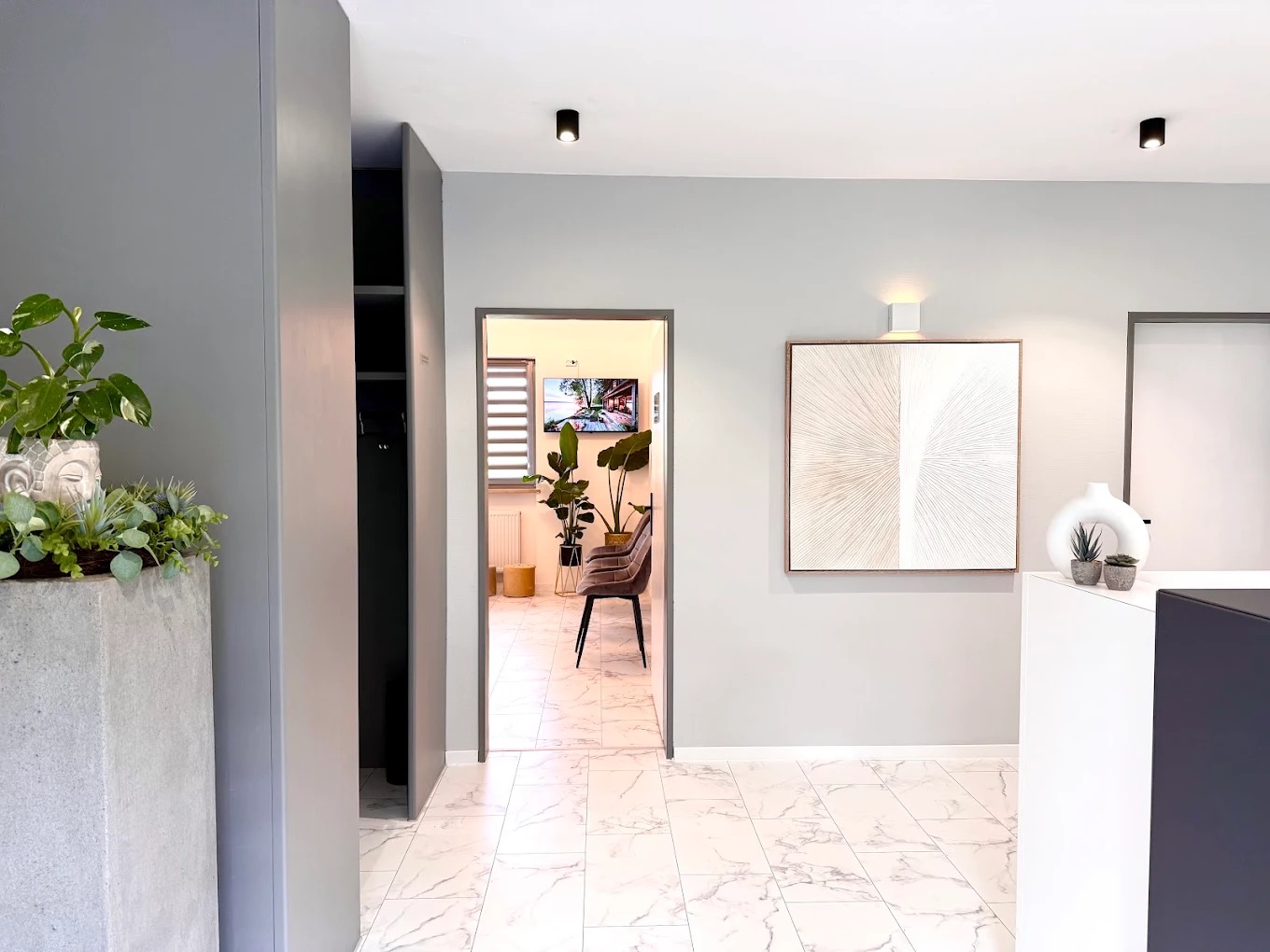
From digital impressions to 3D planning, we rely on modern technology in calm, bright rooms. This makes many treatment steps more comfortable and more precise.
- Digital impression without unpleasant impression material
- Planning on screen, transparent for you
- Short distances, everything in one place
Digital impression without impression material
Precise 3D models instead of conventional impressions
With the intraoral scanner we capture your teeth and oral cavity digitally and create a highly precise 3D model within a few minutes. The digital impressions are available immediately and can be used precisely for further treatment planning, from the fit of your dental restoration to communication with the dental laboratory.
Cone beam computed tomography (CBCT, 3D imaging)
Three-dimensional images for precise planning
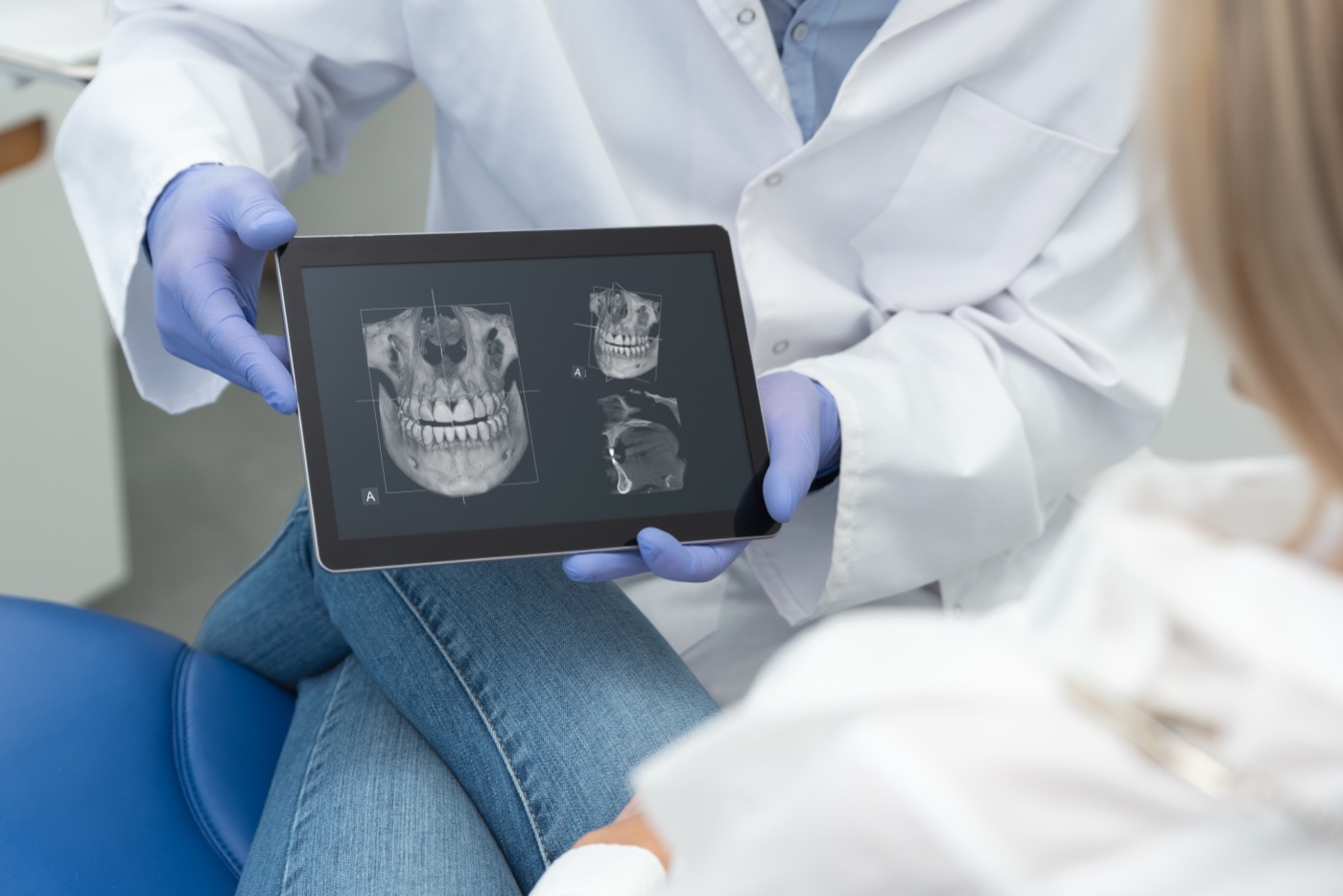
With CBCT we take three-dimensional X-ray images of teeth, jaw and surrounding structures. The 3D imaging supports precise planning of implants and surgical procedures and can help detect hidden inflammation at an early stage, with radiation exposure kept as low as possible.
Our digital equipment
Digital technology for precise diagnoses and greater comfort
Digital technology generally supports more precise diagnoses, greater comfort and more efficient treatments. Beyond the intraoral scanner, we rely on further digital components that are integrated into our everyday practice.
Digital X-rays
Digital X-ray images frequently require less radiation and are available immediately. The high-resolution images can support a more accurate assessment of teeth, bone and early changes.
Cone beam computed tomography (CBCT)
The three-dimensional imaging supports precise planning of implants and surgical procedures and can help detect hidden inflammation at an early stage, with radiation exposure kept as low as possible.
Digital patient records
All data in one place, secure, paperless and accessible at any time. This creates the basis for structured treatment courses and full transparency.
Online appointments & digital communication
Appointments can be booked easily online and information received quickly and digitally. This saves time, can reduce waiting times and makes organising your treatment easier.
Automatic reminders
On request, we automatically remind you of check-up or preventive care appointments. This keeps your dental health regularly in focus, simply and reliably.
Questions & answers
Digital workflow at Lotus Dent in Ingolstadt
An intraoral scanner is a pen-shaped device with which we digitally capture your teeth and oral cavity. Within a few minutes, this produces a highly precise 3D model, entirely without conventional impression material.
- Greater comfort, as no impression material is needed and no gag reflex occurs
- Digital impressions with high precision
- Better fit of dental restorations and prosthetics
- Exact 3D models for accurate treatment planning
- Simple and secure communication with the dental laboratory
- Frequently fewer sources of error than with conventional impressions
- Faster diagnostics in the further course of treatment
- Fewer appointments are often necessary
The pen-shaped scanner is guided over your teeth and captures the oral cavity step by step. A digital 3D model is created directly on the screen. The impression is comfortable and quick; viscous impression material is not required.
Because the digital impressions are available immediately, processes can be made more efficient. This can shorten treatment time and contribute to fewer appointments being needed.
As part of our digital workflow, the digital 3D data is transmitted directly to the dental laboratory. This simplifies planning, transfer and production and supports the precise fabrication of your dental restoration.
- Lower radiation exposure: digital sensors often require less radiation for good image quality, which can reduce the effective radiation dose.
- Better image quality and diagnostics: higher resolutions allow a more detailed view of teeth, bone and soft tissue and can make it easier to detect changes, carious areas and early findings.
- Immediate availability: digital images are visible right away and facilitate consultation as well as swift decision-making.
Cone beam computed tomography (CBCT) is a three-dimensional imaging procedure. It enables a high level of detail and three-dimensional insights and supports an earlier, more precise assessment of bone substance, teeth and surrounding structures. On this basis, individual treatment plans can be drawn up with a high degree of confidence, with radiation exposure kept as low as possible.
- The three-dimensional representation of structures can support the early detection of inflammation, injuries and hidden findings.
- More accurate planning of implants and surgical procedures.
- Better orientation in relation to nerve structures and bone quality.
- Support for treatment decisions, greater confidence and a better assessment of the expected course.
More from our practice
Related treatments
Discover further treatments offered by our dental practice in Ingolstadt.
Implantology
Fixed dental restorations on implants, digitally planned and precisely placed.
Learn more →Tooth Preservation
Fillings, root canal treatment, crowns and bridges, so that your natural teeth are preserved.
Learn more →Preventive Care & Bio-Prophylaxe
Professional teeth cleaning and all-natural organic prophylaxis (Bio-Prophylaxe) for long-term dental health.
Learn more →Experience digital dentistry?
Book your appointment easily online, personal, flexible and available at any time.